|
1
|
|
|
2
|
- In-class and after school presentations promote technology careers like
optical engineering.
- Concept tested and refined in schools with students and teachers.
- Judged a success because of the
“take-home theme packets.”
- Lessons may be created from theme packet concepts.
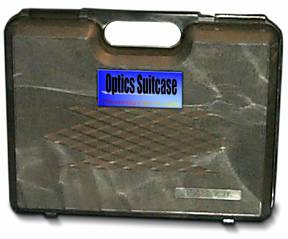
- Funding allows distribution of the “OPTICS Suitcase” to organizations
interested in promoting technical career awareness.
|
|
3
|
|
|
4
|
- Offer an “easy to use” presentation for [optical] engineers to take into
the classroom.
- Use optics as a vehicle to make science and technology interesting and
accessible to people (students, teachers, parents, administrators)
in Southern California
- Work with educators (including after school programs) to create exciting
classroom lessons.
- Work with Southern California Optics Professionals and others to build
on the “OPTICS Suitcase.”
- Secure Southern California funding for increased use and distribution of
the “OPTICS Suitcase.”
|
|
5
|
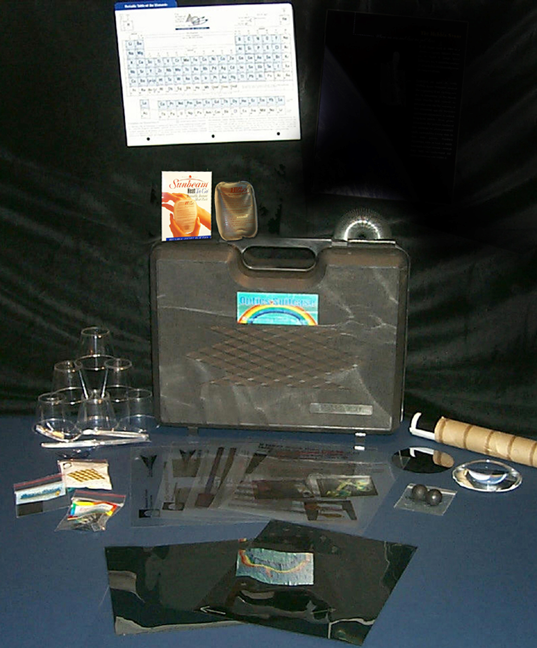
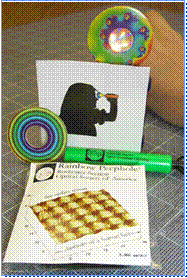
- Almost everything fits in a plastic suitcase.
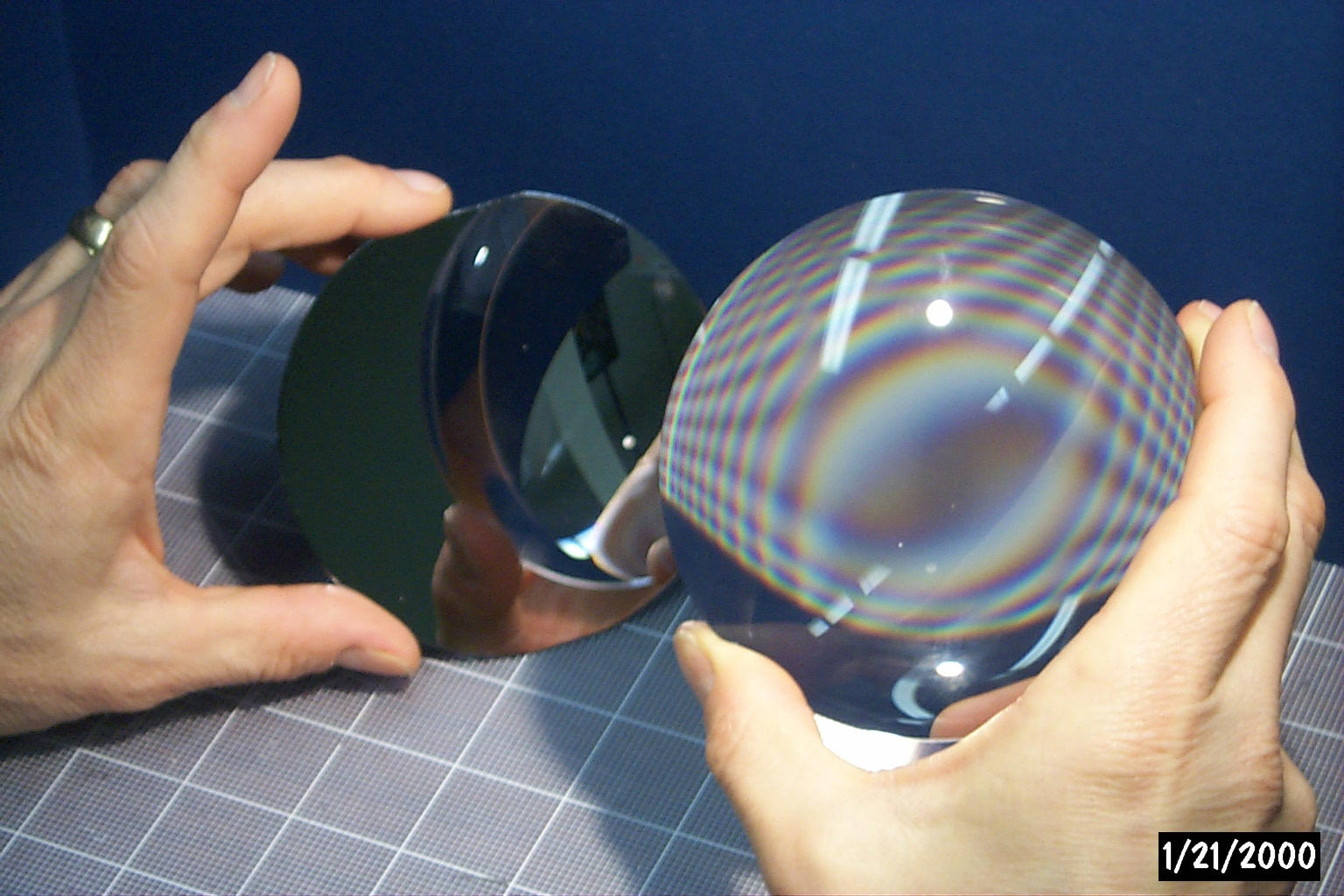
- Many items are reusable: the heating pad, the slinky, sheets of plastic
polarizer material, the glass lens, the set of 7 overhead
transparencies, etc.
- Some items are meant to be given
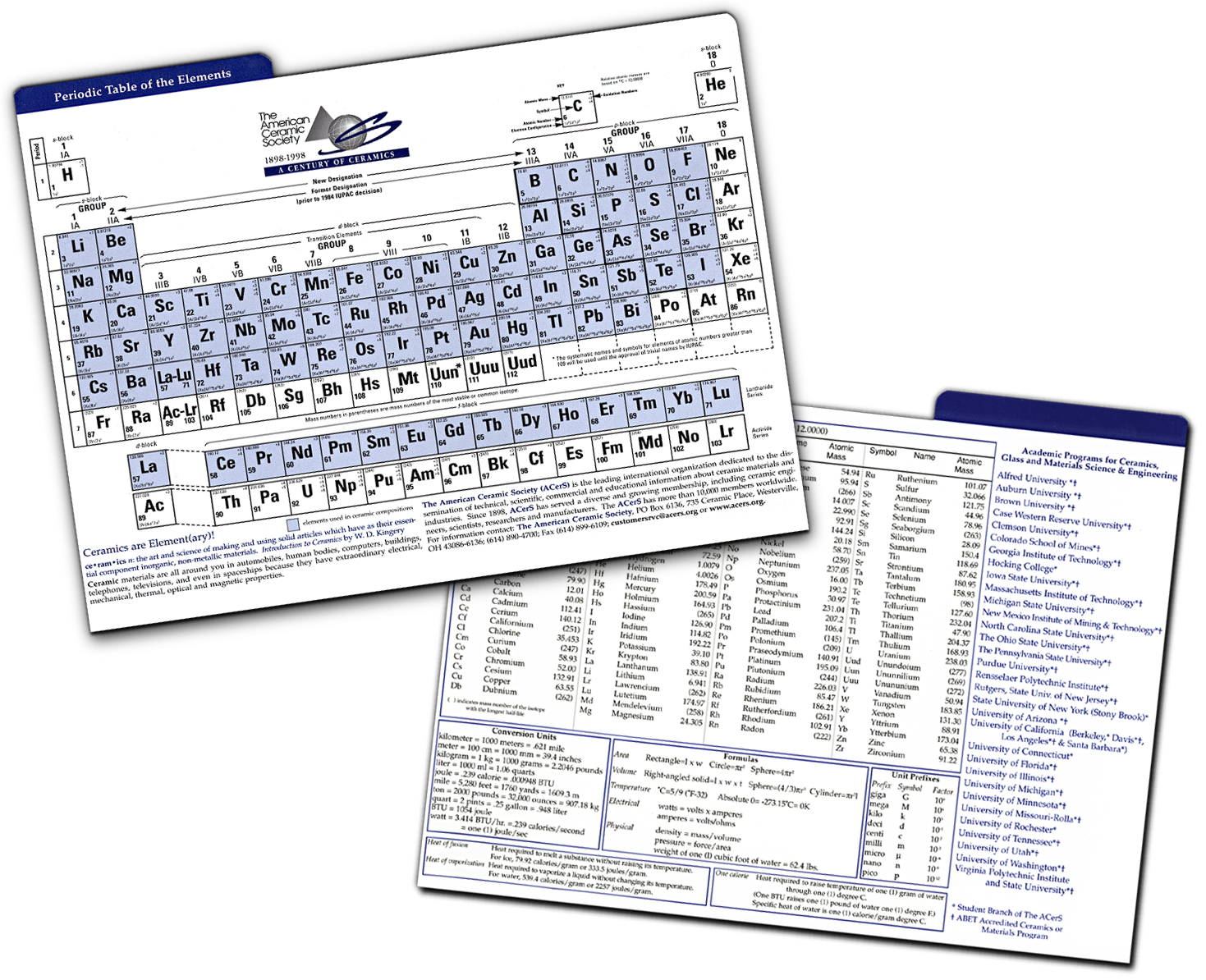
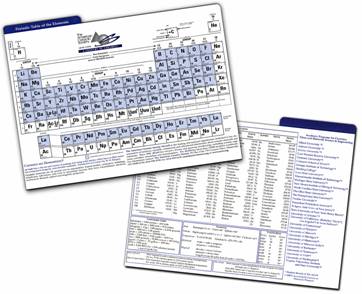
away: the Periodic Table of the Elements.
- 225 “take-home theme packets” are included for ~3, twenty-five student
classrooms. Larger groups can be
accommodated with planning.
- A user guide explains how to do a 40 minute demo.
|
|
6
|
|
|
7
|
|
|
8
|
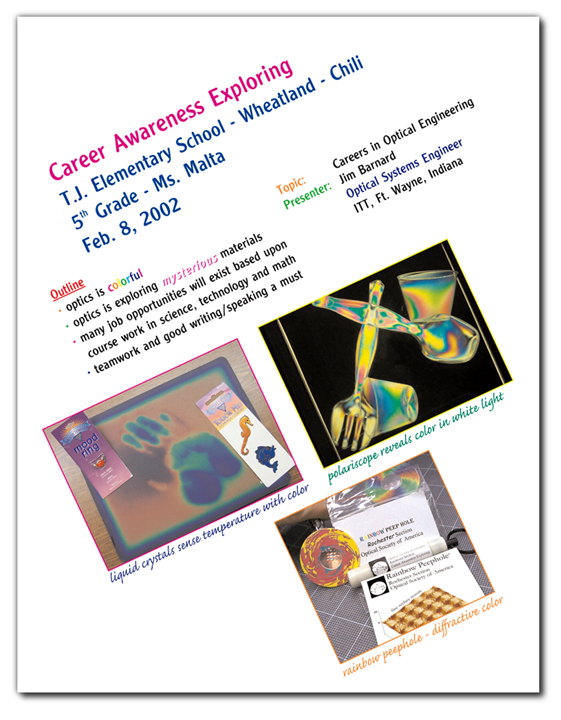
- Introduces speaker, job, and affiliation.
- Identifies any technology
[like optical engineering]
as a career opportunity.
- Defines what is important
for success.
- Highlights the three experiments which follow in colorful terms.
- Serves as a take-home reminder of who you were and what you did at
school.
|
|
9
|
|
|
10
|
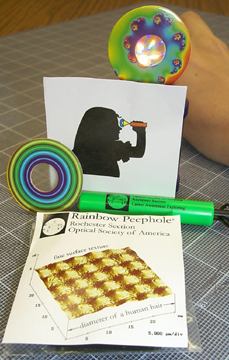
- Light from the flashlight is “redirected” in passing through the plastic
peephole to the eye.
- Where do the colors come from?
- Do you see a regular pattern?
- Identify the colors. Are they the same in each spot?
- Does the pattern change if the flashlight is close or far from the
peephole? How?
- Do you see colors from other people's flashlights, even those far away
from you?
- Do you see colors from the room lights?
- The regular array of bumps on the plastic peephole's surface allows us
to see the color in white light through “diffraction.”
|
|
11
|
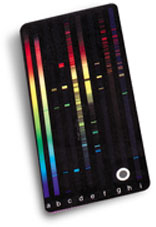
- This night is alive with lights whose spectra are different, intriguing,
and beautiful.
- Help students learn how to tell different light sources apart by
equipping them with this combination holographic diffraction grating
(spectroscope) and pocket-sized spectra chart.
- Explore energy spectra from:
Incandescent light
Fluorescent light
Mercury
Metal halide
Sodium
Neon
|
|
12
|
|
|
13
|
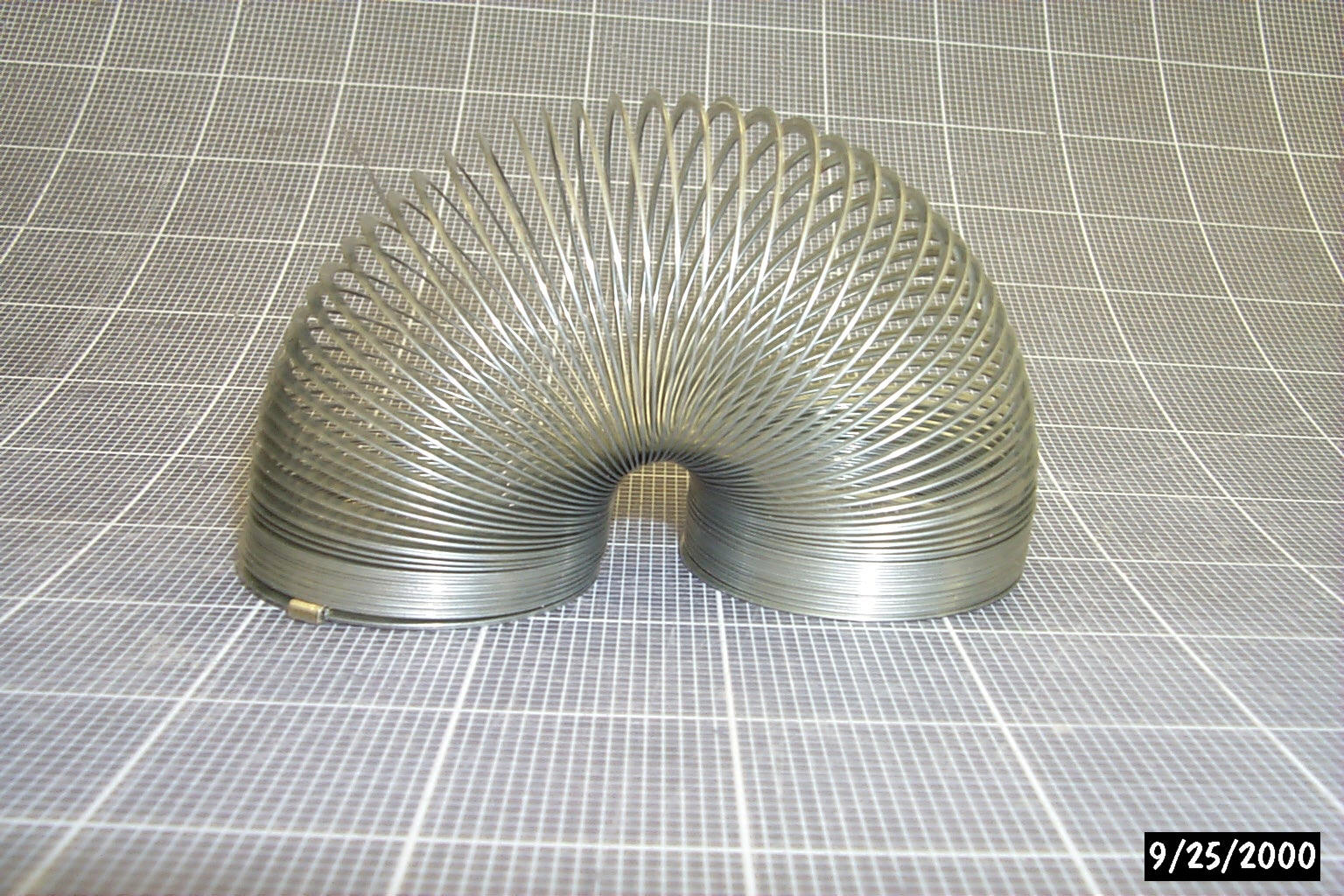
- We can make a slinky vibrate like a wave of light.
- A slinky vibrating in one direction is like “polarized” light.
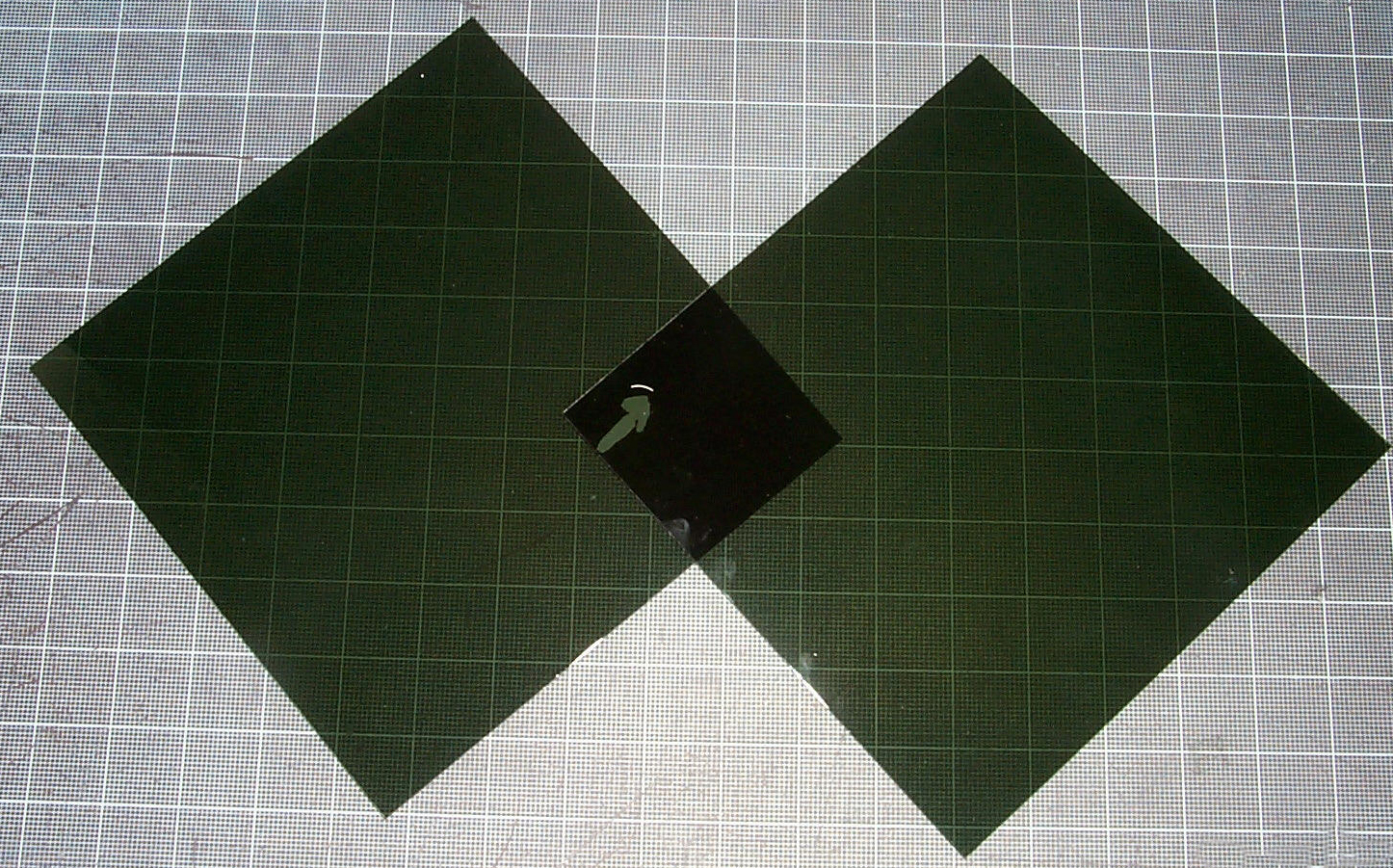
- Optical engineers use polarizers to make light vibrate in one direction.
- Polarizers have a “secret code.”
|
|
14
|
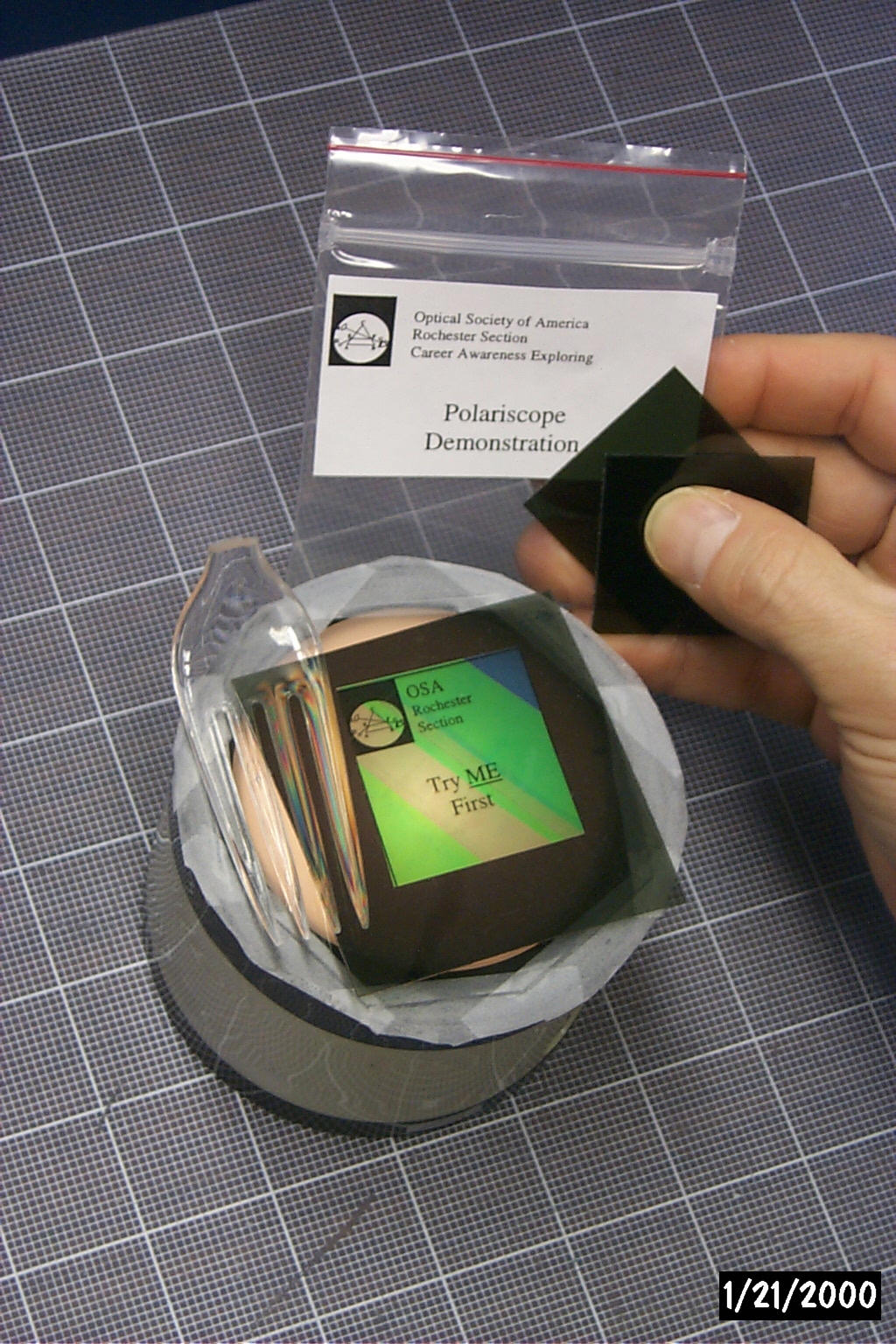
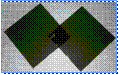
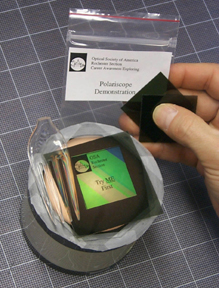
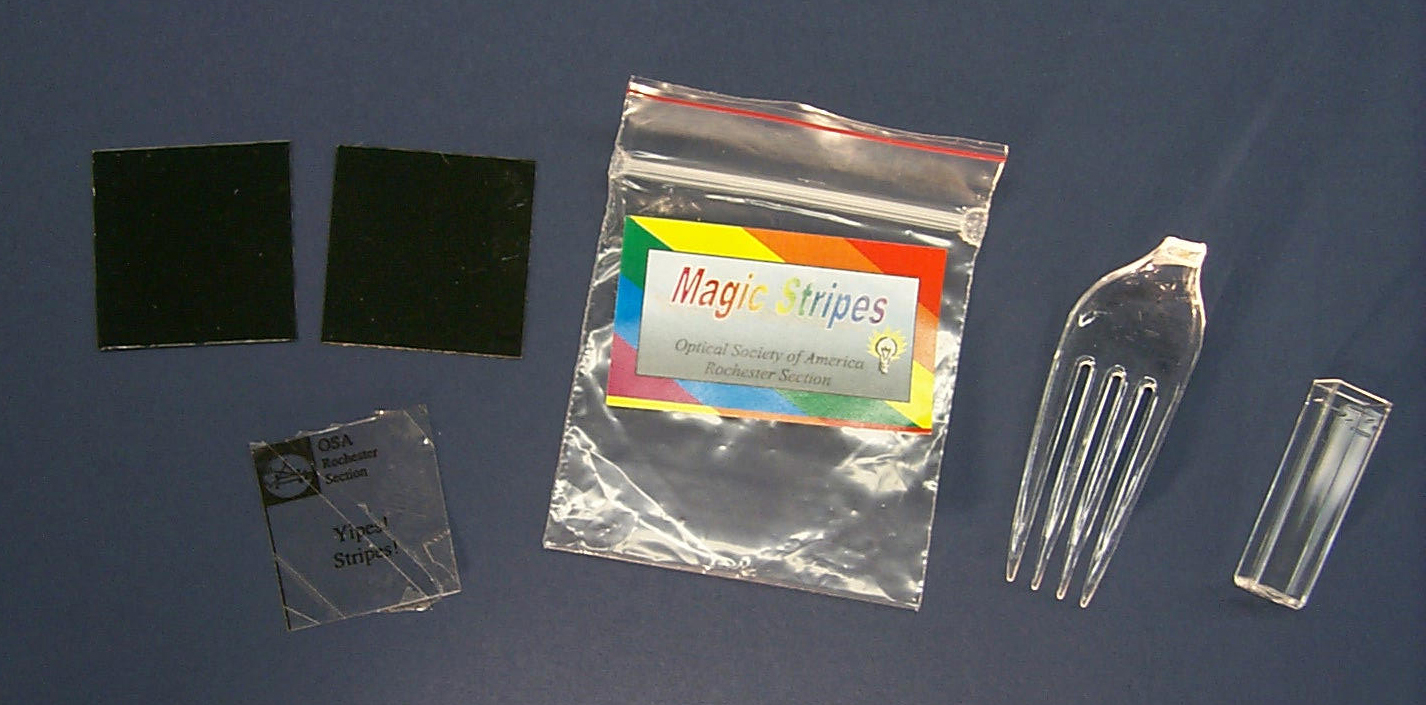
- Make a “polariscope” on the overhead projector and throw on some plastic
tablewear to get their attention.
- Where do the colors come from?
- Make your own polariscope and find the stripes in the plastic foil.
- Examine the plastic cuvette and fork.
- What happens if you bend the tines of the fork?
- Geologists, identify minerals with polarized light microscopes.
- Civil engineers examine stresses
inside structures with transparent models and a polariscope.
- Most lasers are polarized.
|
|
15
|
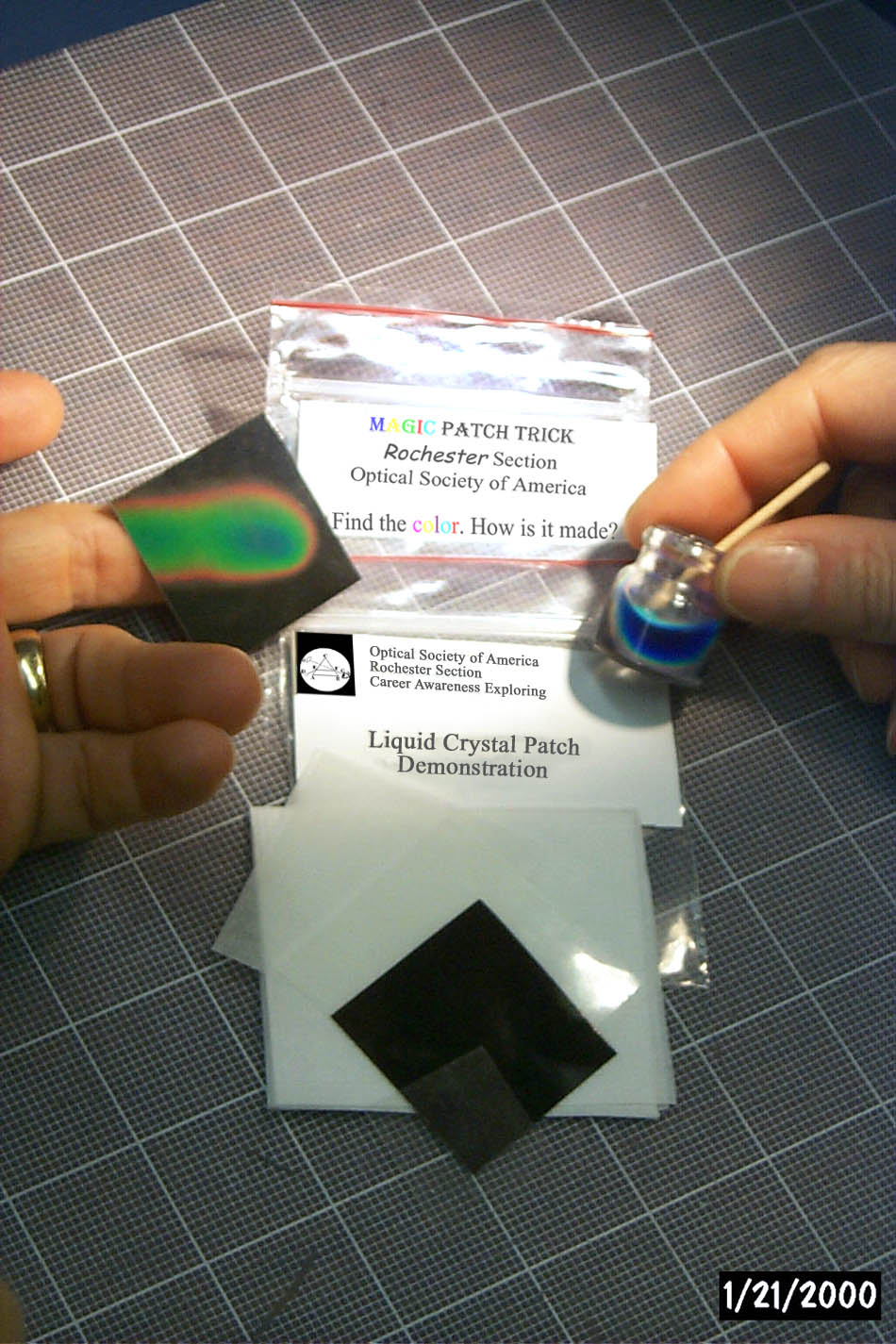
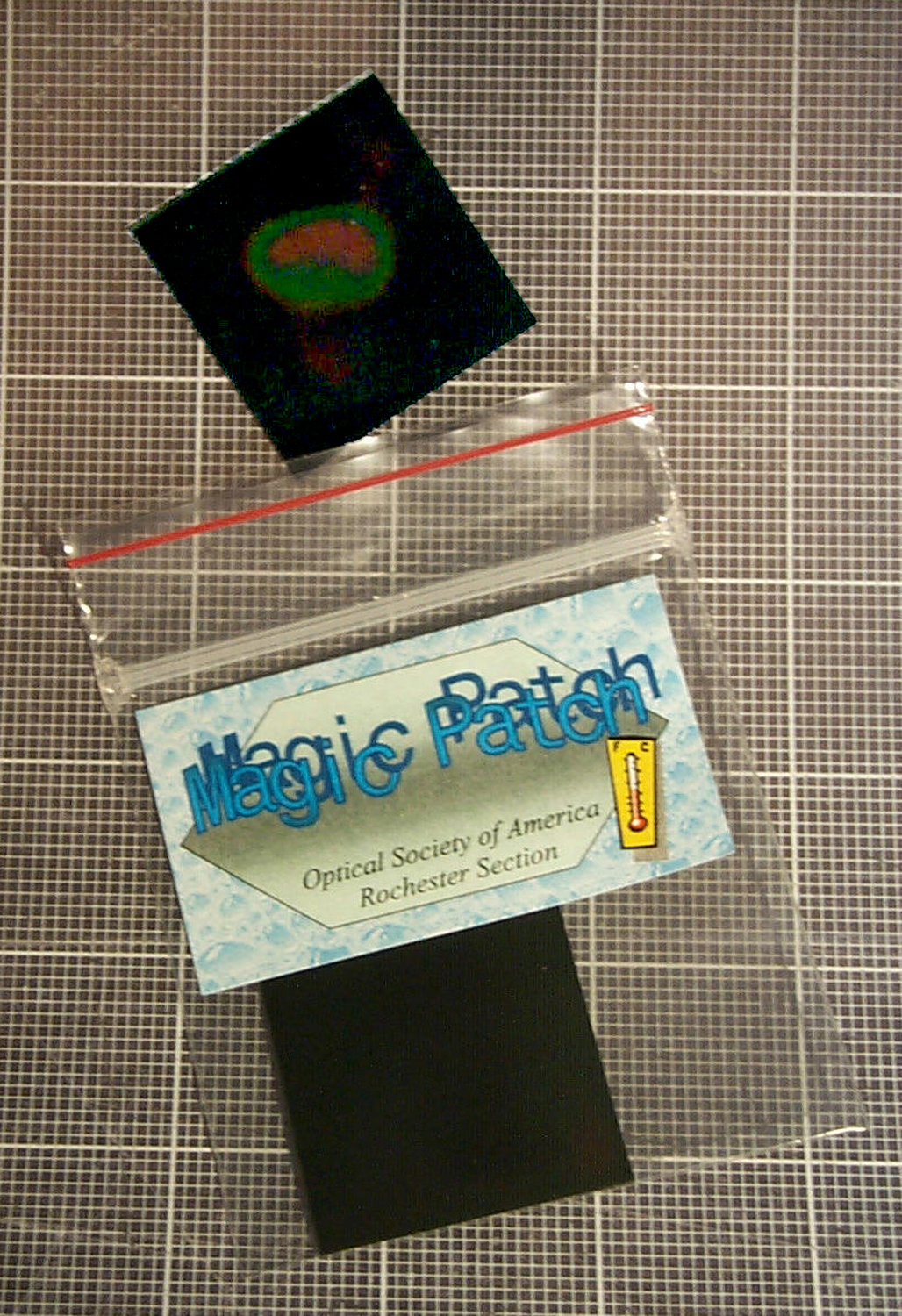
- Place the patch on your wrist and perform the “vampire test.”
- The “Magic Patch” changes color with the heat from your body. The
“living dead” give off no heat!
- Where do the colors come from?
- Does anyone see a vein or artery?
- This is an example of “selective reflection” by liquid crystals, painted
onto the black paper.
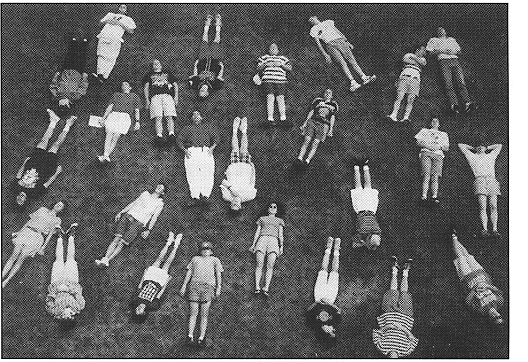
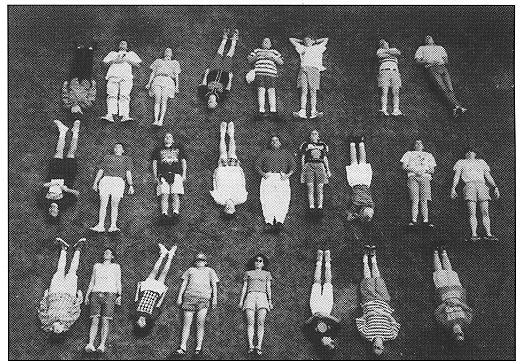
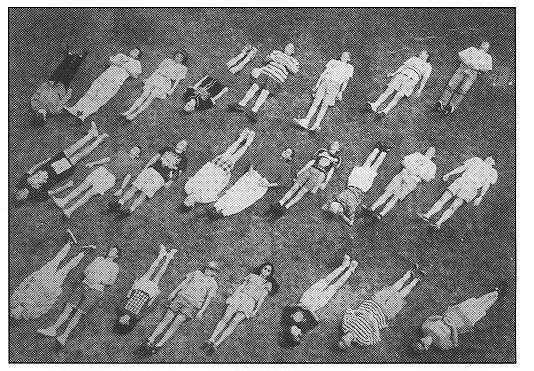
- Liquid crystal are “ordered,” just like the students across the page.
- Scientists use liquid crystals to
build displays for watches and
computer games.
|
|
16
|
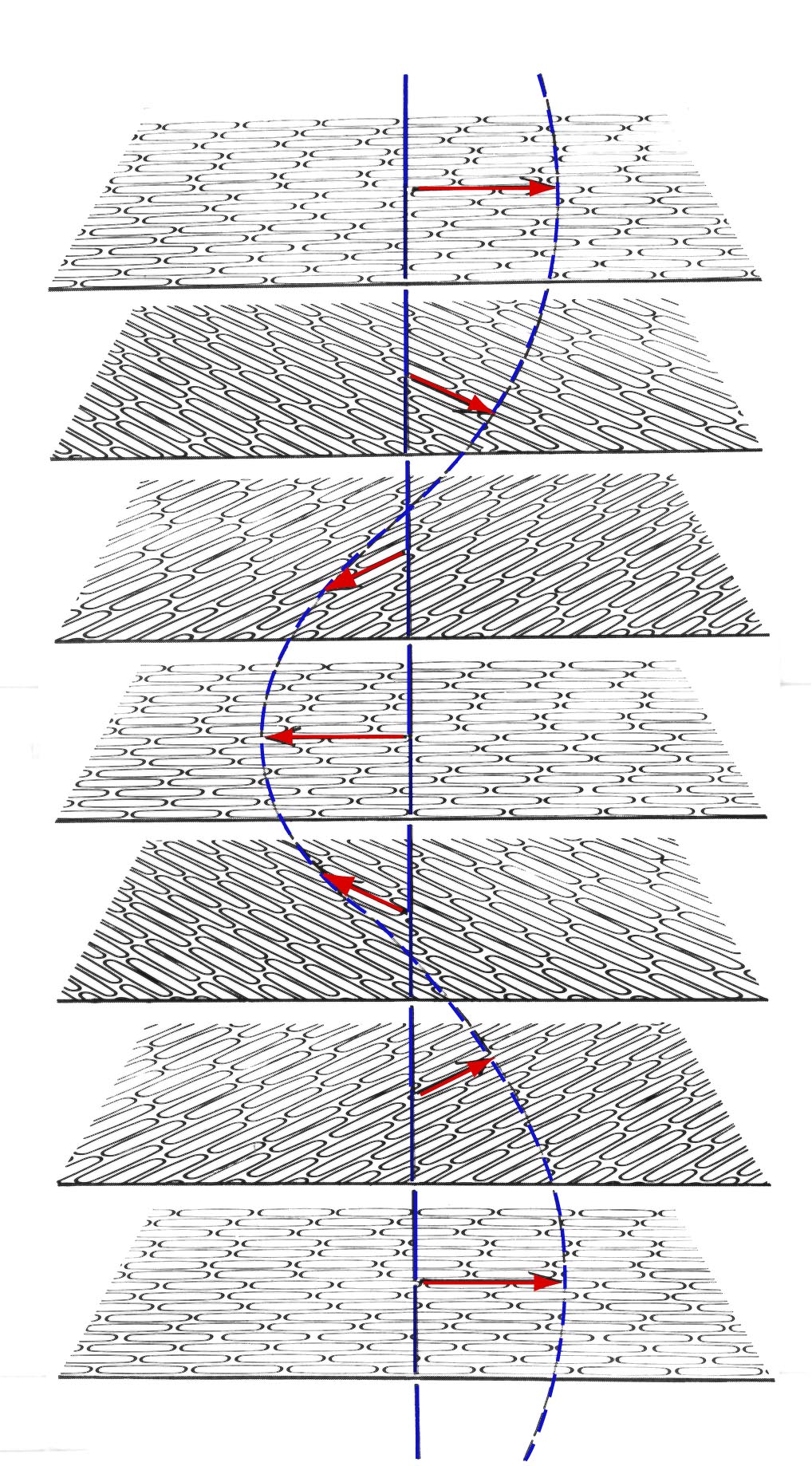
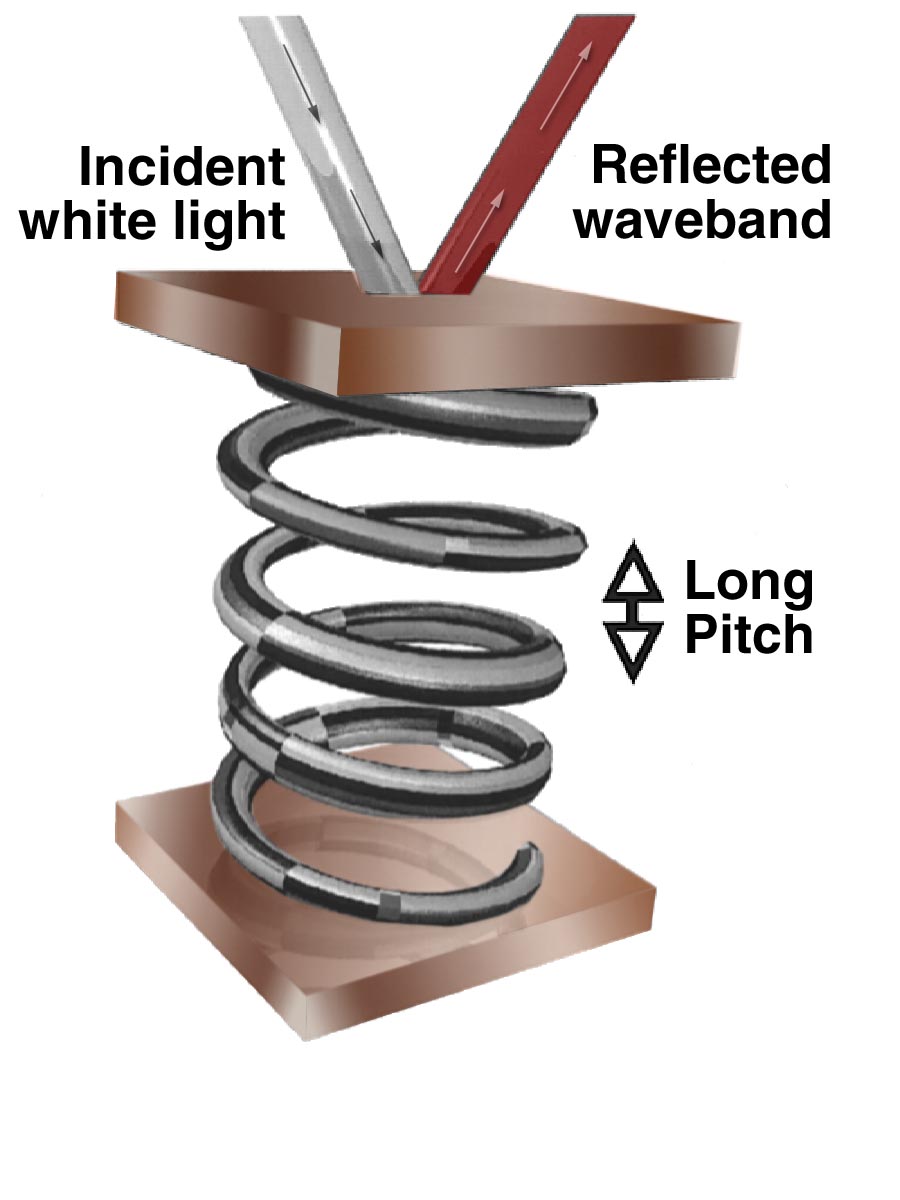
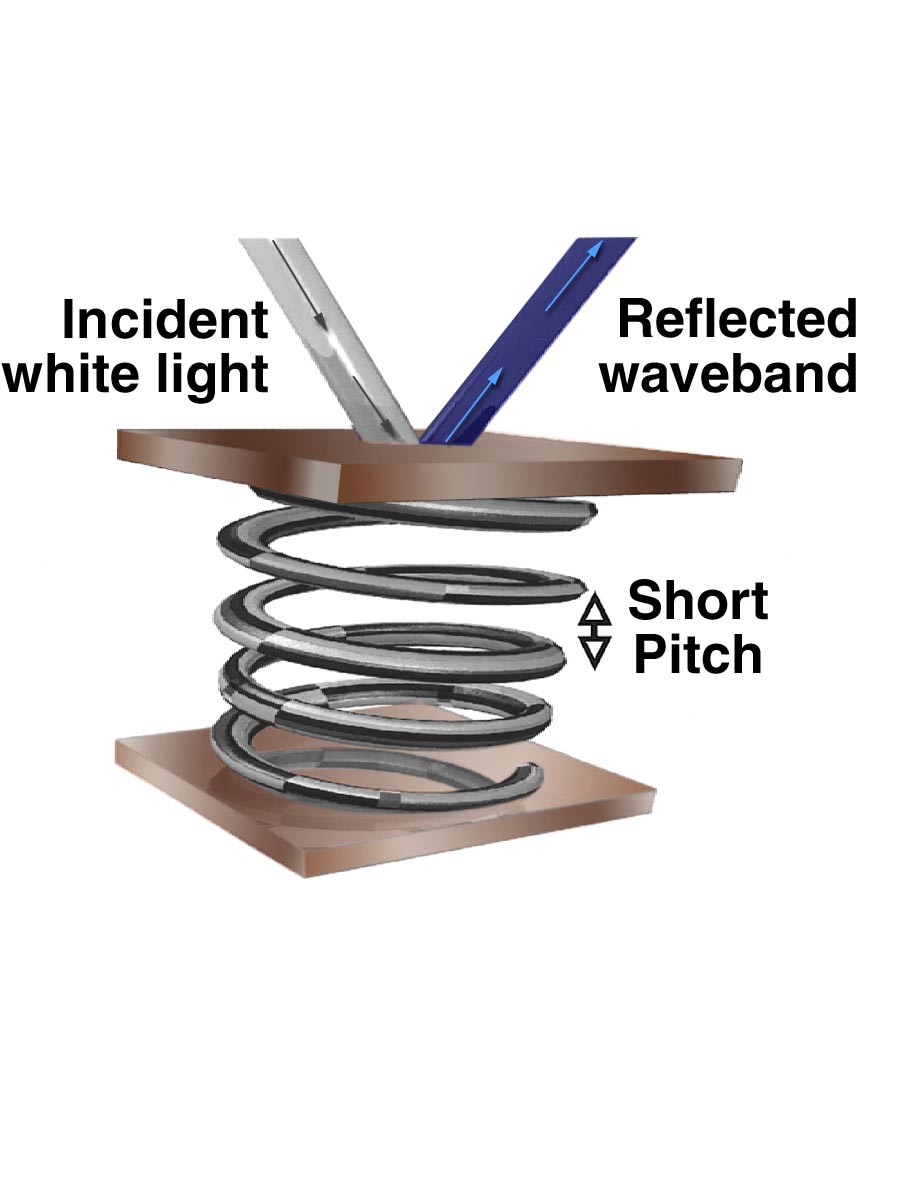
- Within each layer, molecules (students) align with long axes (bodies)
parallel to plane of layer.
- Protruding side groups force molecules in adjacent layers to be
displaced, creating a twisted, helical structure.
|
|
17
|
|
|
18
|
|

 Notes
Notes